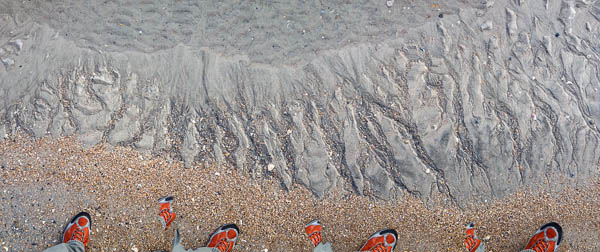
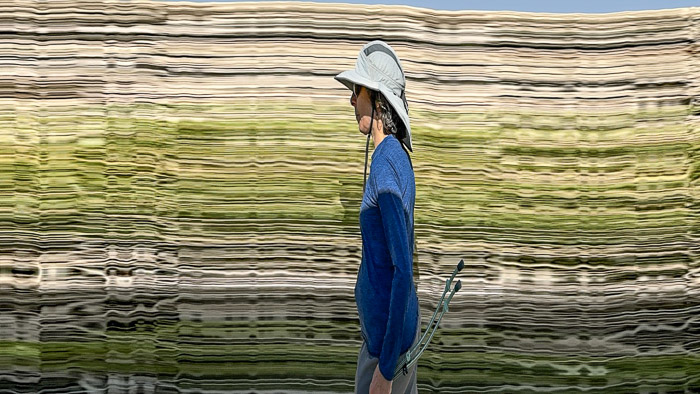
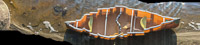
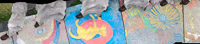
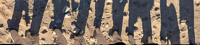
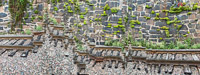
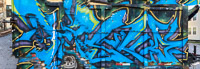
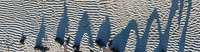
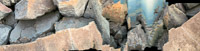
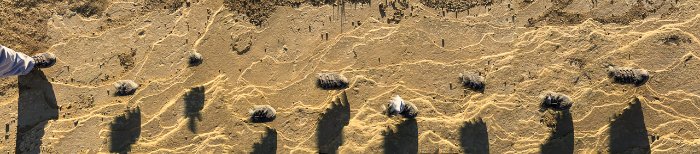
Panopainting (verb, noun) — Panoramic photographs captured in real-time with unpredictable, non-deterministic distortions due to movement of the camera and subject. The aesthetic value of these images depends on the camera's stitching algorithm and the physical brush stroke performed by the photographer. A degree of glitching is expected and often leads to cubist or impressionistic effects. Each exposure is unique due to inevitable variation in subject and technique.
History
Panoramic works of art have been around since early man painted herds of animals on cave walls.
Lascaux Cave — Great Hall of the Bulls [source:pinterest]
Leonardo da Vinci painted his iconic Last Supper in a panoramic format that appeared to be an extension of the room.
Leonardo da Vinci — The Last Supper [source:wikipedia]
Large-scale painted panoramas (aka cycloramas) of major historic events were popular at the time of the Civil War.
Paul Philippoteaux — Gettysburg Cyclorama [source:fandom]
The earliest photographic multi-image panoramas date from around that time.
Martin Behrmanx — San Francisco 1851 [source:medium]
Panoramic cityscapes even became popular as postcards…
L.P. Gallagher — Duluth c1914
The same technique found its way into modern photo albums…
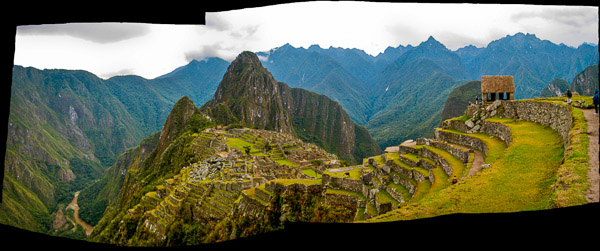
Modern Multi-Image Panorama [source:Diana Pray]
Panographic film cameras were developed and ultimately became inexpensive and disposable.
Disposable Panoramic Camera
With the digital age came specialized software that could stitch images together into a seamless whole.
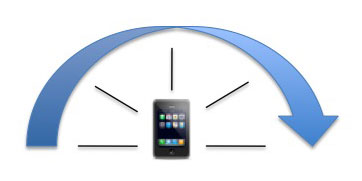
For the first few years I took panoramas in the conventional way—sweeping the phone in a horizontal arc. I call this a traditional or Type 1 Panorama.
Traditional Phone Panorama
Then one day I faced a novel situation. I wanted to take a panoramic photo of colorful cloth on display in a cramped market. There was only six feet between booths. Using an arc would yield very distorted and unpleasing results, so I improvised. I kept the phone steady and walked parallel to the booth.
Roll-Out Phone Panorama
The resulting image was flat and undistorted (except the woman who moved as I passed). I call this a roll-out or Type 2 Panorama.
Ecuador 2013
I refer to these images as “roll outs” because they remind me of the flattened images of pottery, etc. seen in journals.
Mythological Vase, Maya, Late Classic [source:metmuseum.org]
The creative potential of this technique became clear one day when I had some time to experiment on the beach.
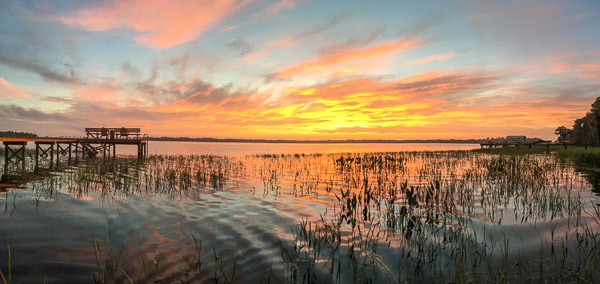
My First Panopainting
The interaction of the moving camera with the surf and my feet created interesting distortions and time lapse sequences. And thus panopainting was born!
Note that you cannot take true slit scan photos with the iPhone panorama software. (These might be considered Type 3 Panoramas.) The phone/camera must be moving. You will need a third party app. (There are several available for free!)
Slit Scan Example (Mono Lake)
Gallery
Panopainting Gallery (click any image to view or advance)
Newer versions of iOS apparently disable the ability of the camera to detect flat sideways motion. This has curtailed my experimentation. I'm going to keep my older phone with older software as a single purpose, panopainting camera.
![Lascaux Cave — Great Hall of the Bulls [source:pinterest]](images/1-lascaux-cave-paintings.jpg)
![Leonardo da Vinci — The Last Supper [source:wikipedia]](images/2-last-supper.jpg)
![Paul Philippoteaux — Gettysburg Cyclorama [source:fandom]](images/3-gettysburg-cyclorama.jpg)
![Martin Behrmanx — San Francisco 1851 [source:medium]](images/4-panorama-1851.jpg)

![Modern Multi-Image Panorama [source:Diana Pray]](images/5-skiing-panorama.jpg)



![Mythological Vase, Maya, Late Classic [source:metmuseum.org]](images/12-mayan-pot-rollout.jpg)