Cellon Live Oak, Pitcher Plants and More!

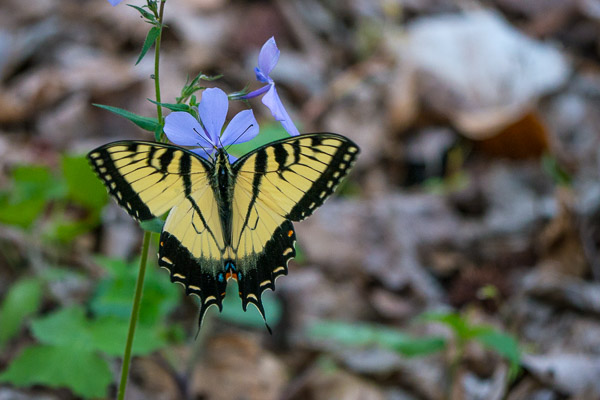
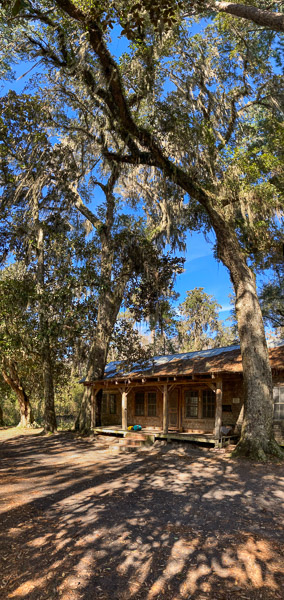
Based on the splendid book Exploring Florida’s Botanical Wonders by Sandra Friend I set out this week-end in pursuit of Pitcher Plants and other botanical curiosities. [gallery] My first stop was the Cellon Live Oak in northern Alachua County. I was standing almost under the tree when I took this HDR shot. Notice the moss near the top is hanging at a different angle! [Still getting used to handling a fisheye lens, hard to keep my hand out of the picture!.]

cellon-oak

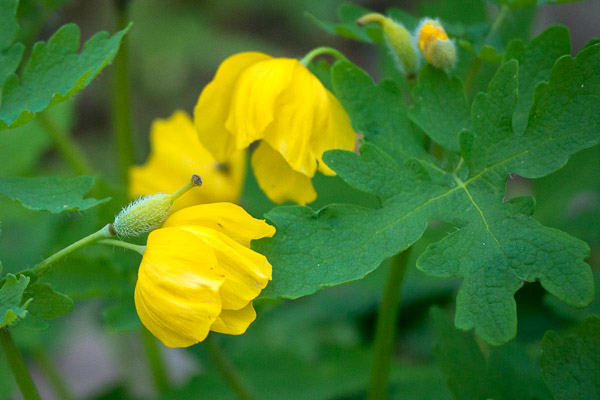
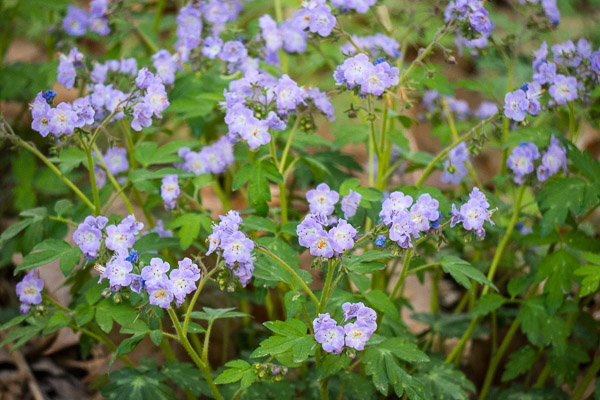
I stopped several times to photograph the abundant roadside flowers. I was especially drawn to these orange “paintbrush” that occurred at only one spot along I-10.

orange-flower

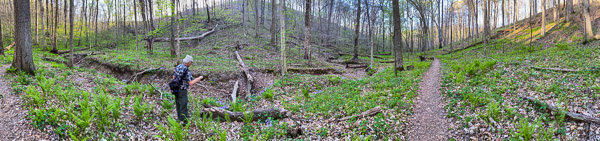
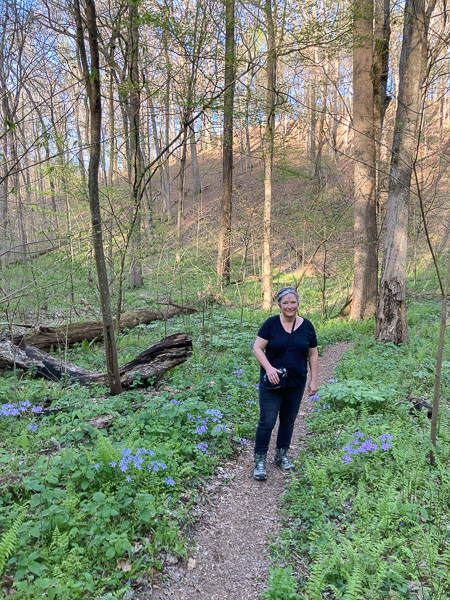
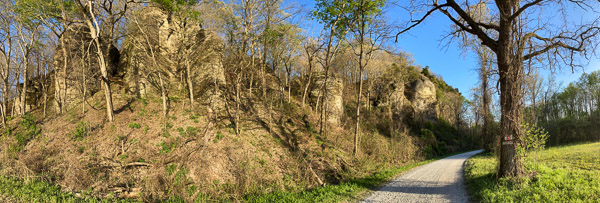
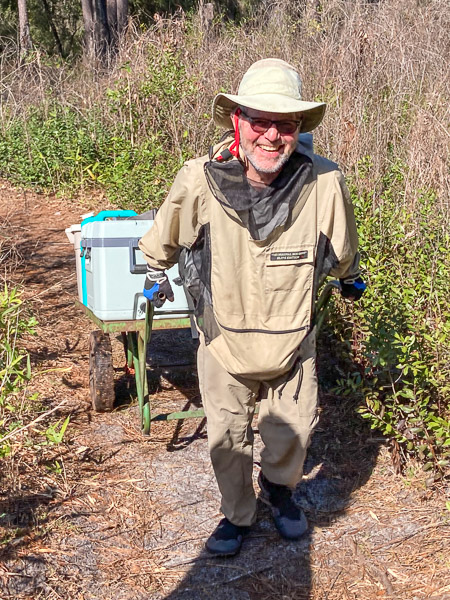
I finally arrived at Clear Creek around 6pm local time (different time zone!). The trailhead is located at the back of a (defunct?) trailer park just to the left of the main gate of Whiting Field Naval Air Station. The road was blocked so I parked in a small lot near the main road and walked to the back where the trail starts. The whole experience was a bit surreal. There was nobody around so I had the place to myself.

clear-creek

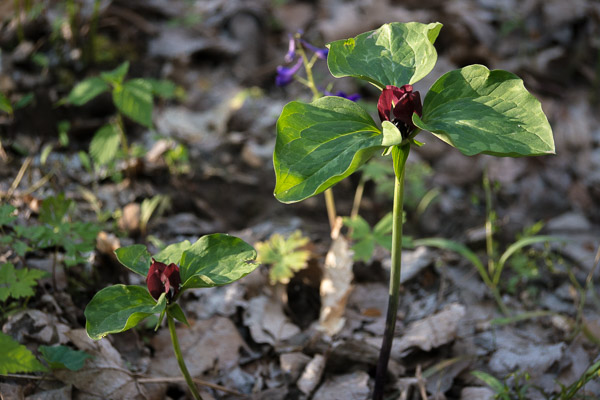
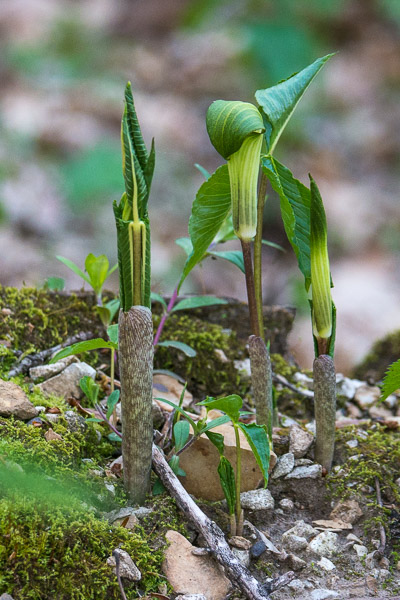
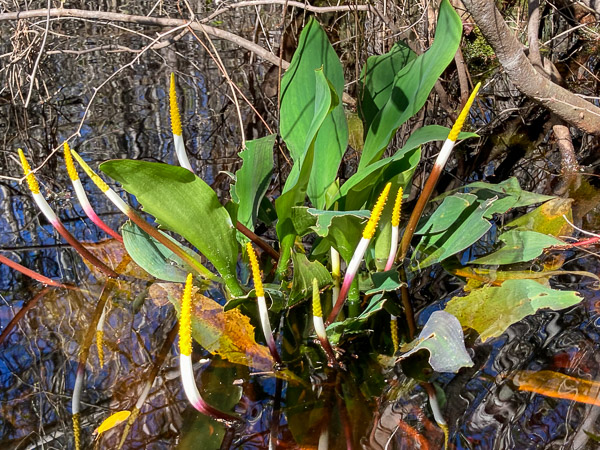
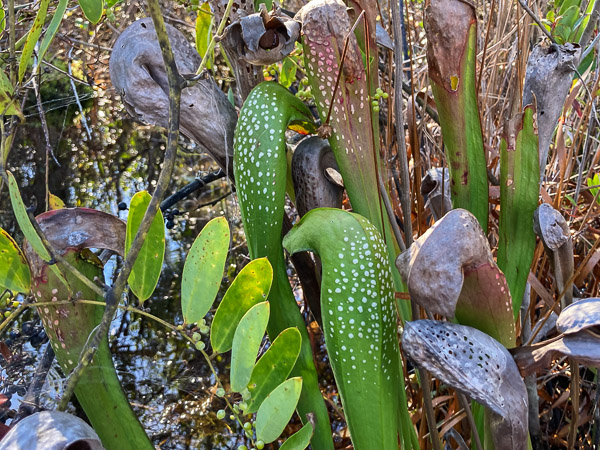
The trail proceeds through three ecological regions [map] as you descend into a ravine. At the bottom is a long boardwalk with clumps of White-Topped Pitcher Plants (Sarracenia leucophylla) and Golden Club (Orontium aquaticum) everywhere! It was a bit frustrating to be up on the walkway with a very limited range of viewing angles. I took most of these photographs with a 400mm equivalent lens. I walk the entire site twice over two hours and headed back to my car at dusk.

pitcher-plants

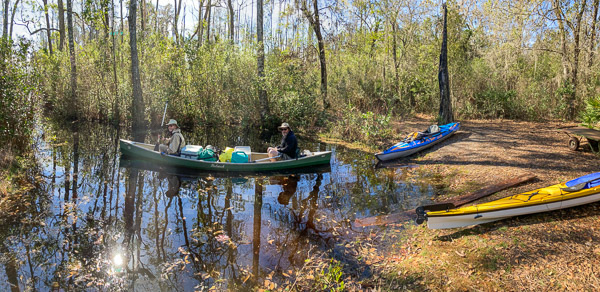
I spent the night in a cheap but adequate motel in Pensacola. The next day dawned rainy and I headed for Yellow River Marsh Preserve State Park. My frustration from the day before was lifted since this is an unimproved site with numerous beautiful plants strewn about. Check page 2 of the gallery for several striking photos from this site.

pitcher-plant-flowers

Unfortunately the weather was gradually getting worse. I ended my exploration with a wet walk around the loop trail at Garcon Point Preserve. I got back to my car just in time and drove away in a tropical downpour.

There is more information online about Florida’s fascinating pitcher and other carnivorous plants.

They Stole My Morning… Again! (DST Rant)

Daylight Saving Time has to be one of the dumbest social conventions of all time! It’s just a bad idea that should be abolished!! DST doesn’t save energy, negatively impacts the health of millions, and robs me of an extra hour of daylight every morning!

I thought I’d review some recent evidence here. I’ve added emphasis to the most important bits. Decide for yourself!

Changing to daylight saving time cuts into sleep and increases workplace injuries. Barnes CM, Wagner DT.

J Appl Psychol. 2009 Sep;94(5):1305-17. doi: 10.1037/a0015320.

The authors examine the differential influence of time changes associated with Daylight Saving Time on sleep quantity and associated workplace injuries. In Study 1, the authors used a National Institute for Occupational Safety and Health database of mining injuries for the years 1983-2006, and they found that in comparison with other days, on Mondays directly following the switch to Daylight Saving Time-in which 1 hr is lost-workers sustain more workplace injuries and injuries of greater severity. In Study 2, the authors used a Bureau of Labor Statistics database of time use for the years 2003-2006, and they found indirect evidence for the mediating role of sleep in the Daylight Saving Time-injuries relationship, showing that on Mondays directly following the switch to Daylight Saving Time, workers sleep on average 40 min less than on other days. On Mondays directly following the switch to Standard Time-in which 1 hr is gained-there are no significant differences in sleep, injury quantity, or injury severity.

Daylight saving time shifts and incidence of acute myocardial infarction–Swedish Register of Information and Knowledge About Swedish Heart Intensive Care Admissions (RIKS-HIA).
Janszky I, Ahnve S, Ljung R, Mukamal KJ, Gautam S, Wallentin L, Stenestrand U.

Sleep Med. 2012 Mar;13(3):237-42. doi: 10.1016/j.sleep.2011.07.019. Epub 2012 Jan 30.

Our data suggest that even modest sleep deprivation and disturbances in the sleep-wake cycle might increase the risk of AMI across the population. Confirmation of subgroups at higher risk may suggest preventative strategies to mitigate this risk.

Lost sleep and cyberloafing: Evidence from the laboratory and a daylight saving time quasi-experiment.
Wagner DT, Barnes CM, Lim VK, Ferris DL.

J Appl Psychol. 2012 Sep;97(5):1068-76. doi: 10.1037/a0027557. Epub 2012 Feb 27.

The Internet is a powerful tool that has changed the way people work. However, the ubiquity of the Internet has led to a new workplace threat to productivity-cyberloafing. Building on the ego depletion model of self-regulation, we examine how lost and low-quality sleep influence employee cyberloafing behaviors and how individual differences in conscientiousness moderate these effects. We also demonstrate that the shift to Daylight Saving Time (DST) results in a dramatic increase in cyberloafing behavior at the national level. We first tested the DST-cyberloafing relation through a national quasi-experiment, then directly tested the relation between sleep and cyberloafing in a closely controlled laboratory setting. We discuss the implications of our findings for theory, practice, and future research.

The human circadian clock’s seasonal adjustment is disrupted by daylight saving time. Kantermann T, Juda M, Merrow M, Roenneberg T.

Curr Biol. 2007 Nov 20;17(22):1996-2000. Epub 2007 Oct 25.

A quarter of the world’s population is subjected to a 1 hr time change twice a year (daylight saving time, DST). This reflects a change in social clocks, not environmental ones (e.g., dawn). The impact of DST is poorly understood. Circadian clocks use daylight to synchronize (entrain) to the organism’s environment. Entrainment is so exact that humans adjust to the east-west progression of dawn within a given time zone. In a large survey (n = 55,000), we show that the timing of sleep on free days follows the seasonal progression of dawn under standard time, but not under DST. In a second study, we analyzed the timing of sleep and activity for 8 weeks around each DST transition in 50 subjects who were chronotyped (analyzed for their individual phase of entrainment). Both parameters readily adjust to the release from DST in autumn but the timing of activity does not adjust to the DST imposition in spring, especially in late chronotypes. Our data indicate that the human circadian system does not adjust to DST and that its seasonal adaptation to the changing photoperiods is disrupted by the introduction of summer time. This disruption may extend to other aspects of seasonal biology in humans.

Social jetlag and obesity.
Roenneberg T, Allebrandt KV, Merrow M, Vetter C.

Curr Biol. 2012 May 22;22(10):939-43. doi: 10.1016/j.cub.2012.03.038. Epub 2012 May 10.

Obesity has reached crisis proportions in industrialized societies. Many factors converge to yield increased body mass index (BMI). Among these is sleep duration. The circadian clock controls sleep timing through the process of entrainment. Chronotype describes individual differences in sleep timing, and it is determined by genetic background, age, sex, and environment (e.g., light exposure). Social jetlag quantifies the discrepancy that often arises between circadian and social clocks, which results in chronic sleep loss. The circadian clock also regulates energy homeostasis, and its disruption-as with social jetlag-may contribute to weight-related pathologies. Here, we report the results from a large-scale epidemiological study, showing that, beyond sleep duration, social jetlag is associated with increased BMI. Our results demonstrate that living “against the clock” may be a factor contributing to the epidemic of obesity. This is of key importance in pending discussions on the implementation of Daylight Saving Time and on work or school times, which all contribute to the amount of social jetlag accrued by an individual. Our data suggest that improving the correspondence between biological and social clocks will contribute to the management of obesity.

Lumix TS4 Waterproof Camera Review

Review

I recently purchased this waterproof camera to take along on my kayak trip to the Everglades. It cost just under $300 online. The results so far are impressive, especially the high-res video.

lumix-ts4

After a month I’ve become pretty familiar with its basic functions, but the PDF-only manual is thick and there are lots of bells and whistles I haven’t tried (such as time-lapse). Here is my quick review…

“Waterproof”

It seemed to survive the salt water nicely, though I did not open the battery/card door during the trip and did not use it underwater. I bought a floating wrist strap that worked well. Very nice not to worry about getting it wet! There are two caveats however: 1) It is very easy to get water or salt residue on the lens window. Inspect and clean it often. 2) There are controversies on the web regarding water damage, warranty service, and required replacement of the door seal. My impression is the company is beginning to listen to customers who had problems and is making maintenance easier.

Basic Photography

The basic functions are all there and reasonably well implemented. The location of the wide/tele buttons took some getting used to (they are on the back where you can hit them with your thumb). The Manual Mode is a bit odd in that you only have two choices for aperture (f3.3 and f10 at full wide). I thought it was broken at first. (Perhaps there are only two apertures available in full auto as well? This might be a reasonable design compromise for a small camera.) Switching to shutter speed takes another button press. This is clearly a design flaw since most of the adjustment comes from the shutter. In Manual Mode it should default to shutter speed and aperture adjustment should require the extra step!

Video

The video sequences I shot in the Everglades were truly impressive. I set the camera to capture high-res mp4. The raw files fill my desktop screen and I’ve had to reduce the resolution to use them on the web and DVD. I’ve edited the best clips together into a short movie so you can judge for yourself!

Panorama Mode

Based on one example, this seemed to work well…

philadelphia-panorama

 Handheld HDR

This is where the extra steps and awkwardness of Manual Mode became painfully apparent. The process was complicated by the fact that the “meter” hides itself between exposures, so I had to partially depress the shutter release each time I wanted to make adjustments. (Perhaps there is a setting somewhere that will override this? I should probably just revert to doing the exposure math in my head like we did back in the old days before meters became common. <smile>) That said I was able to get a few decent two-exposure HDR photos without too much frustration…

philadelphia-church-hdr

philadelphia-buidings-hdr

To get these quick-and-dirty high dynamic range (HDR) photos take two photos of the same scene with the same aperture at 1.5 and -1.5 EV. Then combine them in Photoshop or your favorite HDR software.

Conclusion

The gallery below shows a general sampling of the photos I’ve taken in the past few days. Overall I am quite pleased with this camera and its minor faults are more than compensated by being waterproof!

Everglades (Sail) Kayak Trip 2013

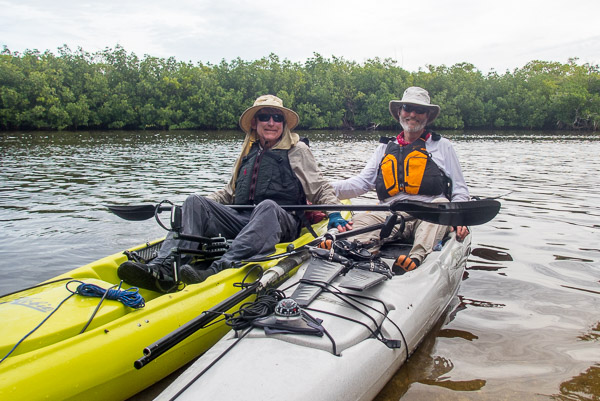
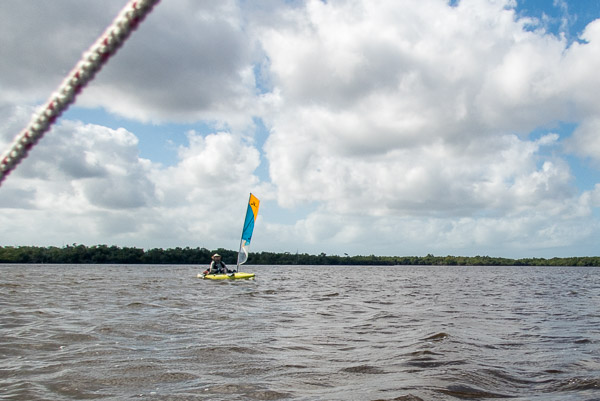
Just back from the Everglades with highlights too numerous to relate them all here. For a start I think we’ve hit on the perfect mode of transportation—pedal kayaks with sails! The only downside compared with a canoe is getting on/off the chickees. In every other respect they were superior to canoes and even other types of kayaks. We especially noticed how wind and waves were much less of the threat, and wind could often be put to good use! Unlike the sail canoe rig I’ve used in the past, the kayaks are much safer if they capsize.

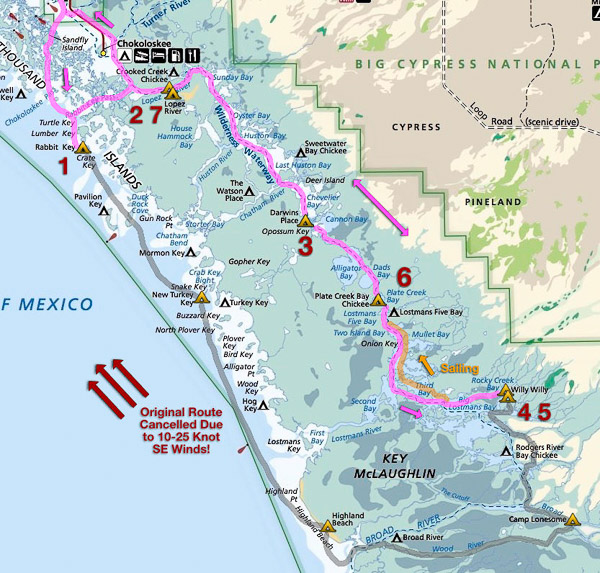
Our route was aggressive and included a passage through Gopher Key, which is only possible at high tide. As you can see, we made extensive use of the sails with a prevailing winds from the north and northeast.

everglades-route-2013-small

I also tried a waterproof camera for the first time with good results, especially video! I’ve edited the clips together into a seven minute long high res feature. Be sure to click on the ‘full screen’ button if available!

Everglades Kayak Trip 2013
201 Mb Video

It was a joy to be able to keep a camera close at hand and not worry about getting it wet. I also got a few good bird and HDR shots with my other cameras [full gallery], but my photography time was limited because we were having too much fun just exploring! Here are a few highlights…

crooked-creek-chickee

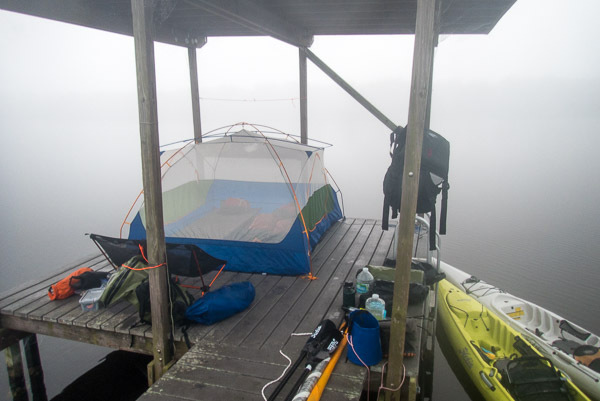
First day we stayed at the new Crooked Creek Chickee near the head of the Lopez River. In spite of being just off the main channel the site has a secluded feel. It replaces the now defunct chickee on Sunday Bay (which we will miss!). The new chickee is nice with a few new features: high flat roofs, robust ladders, and elevated kitchen shelves.

kayak-sailing-gulf-of-mexico

The next day we sailed for the first time on the large bays along the way to the Plate Creek Chickee. We were excited to return to this historical location that existed before there was a national park. Alas, the original chickee has been razed and replaced by a new one set away from the small island. Another old place we will miss.

We sailed almost the entire next day. It was phenomenal!! Check out the video above to share some of the thrill. Unfortunately, in the heat of the moment getting the sails up, I lost track of my paddle. <frown> It was on a leash trailing behind as the boat took off and the leash failed due to our excessive speed. Ironically this occurred on the upper Lostmans River. Out in the Gulf of Mexico we sailed about a mile off-shore and reached New Turkey Key with plenty of time to explore and take pictures. Along the way I cut a black mangrove pole to replace my paddle. It worked remarkably well!

new-turkey-key-hdr

new-turkey-key-campsite

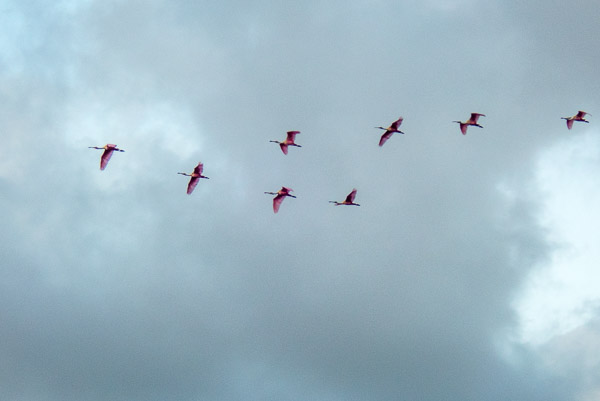
The next day we waited for the tide to start rising before heading up Charley Creek to reach Gopher Key. This is a magical place with birds everywhere! My conservative estimate is we saw over four hundred White Pelicans soaring, landing and fishing. No Avocets this time, but there were hundreds of small shore birds feeding and about a dozen Roseate Spoonbills. At one point we witnessed an (unsuccessful) attack from a Peregrine Falcon. It only lasted 20-30 seconds, but the ensuing pandemonium was a sight to behold! The falcon flew right over our heads as he left the scene with empty talons.

charleys-creek-low-bridge

We had an uneventful exit via Gopher Key Creek and pedaled up to the Sweetwater Chickee. We got out early the next day and caught the end of the outgoing tide to get quickly down to The Watson Place. While there we took the now canonical photo by the sugarcane caldron. We made our way down the lower Chatham River and out to the Gulf. We rested at the river mouth and watched a pair of Dolphins feeding on the incoming tide. On the way we saw or heard several Manatees coming up to breathe.

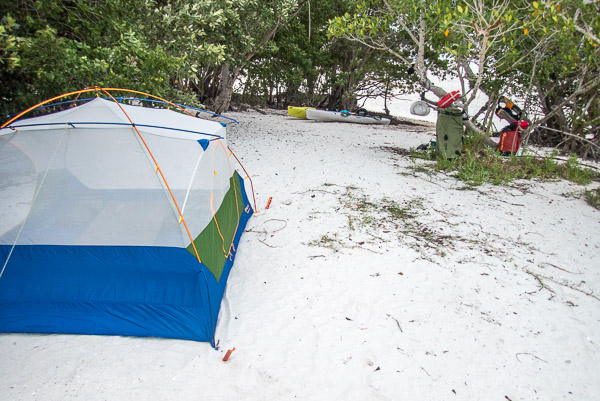
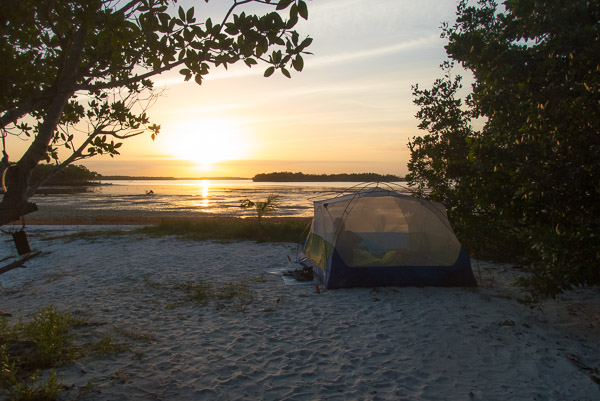
We got to sail some more on our way to Rabbit Key and our last night on the beach. Along the way we saw more White Pelicans and at least three Sea Turtles. I’m convinced that pedaling and sailing are much better than paddling for seeing wildlife. Waving your arms in the air is probably a bit more threatening. We again arrived with plenty of time to explore and had a small beach fire to keep the bugs away in the evening.

The next day we pedaled our way to Sandfly Pass and back to the Ranger Station. All and all this was an exceptional trip and I am completely enamored with the multi-power Kayaks! We found that we could avoid damaging the drive fins by judicious choice of route. Wind and waves were much less of a problem and even became our ally when we put up the sails!

end-of-the-trail

How to Car Top a 16 Foot Kayak on a 15 Foot Prius

I recently acquired a kayak and have been experimenting with ways to carry it on the roof of my Prius. I’ve had lots of experience with canoes, which you can flip over on your shoulders (portage position) and place them on top of the car from that stance. With a sit-on-top kayak there’s no place for your head to go. I was stuck looking for a way to get the kayak on top of the care by myself. Then I hit on the idea outlined below.

A Note of Caution! Carrying a large object on top of a car is potentially dangerous. These instructions are intended as a guide only. It is up to you to ensure that your specific application is safe! If in doubt  get someone with more experience to help you.

Mounting/Dismounting

You will need a standard set of kayak pads, 14-16 inches wide as shown below. I bought mine online for less than $15. Make sure the pads are clean and free from small grains of sand. You may also wish to temporarily place a rag or other barrier to protect your car’s finish. Success depends on the kayak hull sliding over these pads. A little dish soap might help if there is too much friction.

Step 1

If you haven’t already, remove everything you can from the boat. You want it to be as light as possible and avoid items that will blow in the wind.

Place the pads and kayak as shown here. Notice I started on the side of the roof, not the center. You could start in the center if your arms are long enough and you avoid the rear wiper and antenna mount. The side seemed easier to me.

cartop-kayak-1st-position

Step 2

Lift the end of the kayak onto the rear pad. With a Prius, the hull may rest partially on the spoiler. This is okay as long as you tilt the boat completely onto the pad before you do any sliding.

cartop-kayak-2nd-position

Step 3

Lift the back end of the kayak and slide the boat forward on the rear pad. Then lift higher and slide it forward on the forward pad until it balances easily on the roof as show here.

cartop-kayak-3rd-position

Step 4

Move the rear pad up to the front and continue to slide the boat forward to the final position. You can then “walk” the ends toward the middle, fine tune the pad placement and tie it down. The hull should be nearly horizontal when you are finished. Be sure there is at least an inch of clearance between the hull and the roof.

cartop-kayak-4th-position

Simply reverse these steps to get the boat down when you arrive at your destination.

The Classic Four Point Tie down

This the standard technique using rope to tie down any sort canoe or kayak on the roof of a car. If you have straps, the details will be different but you must ensure that the boat is secure at all four points (forward, aft, left and right)!

Larger cars often have metal eyes underneath that were used to secure the car during shipping. These are excellent tie down points when they are available. Larger cars have four. Some have two in the front and only one in the back. The Prius for some reason has only one left rear tie down eye. Most of the undercarriage is covered by plastic panels to minimize drag. Whatever the configuration you must find four secure (metal!) tie down points before proceeding.

With the Prius it is necessary to use metal “S” hooks for three of the four tie down points. There is no easy way for me to photograph these points, and they probably vary somewhat from one model year to another. You will need to get down on the ground and inspect the underside of your car for attachment points. Do not attach to anything plastic!

Here are the lines I use (from left to right): side line (through the rear doors), front cheater hook, front line with hook, rear line with hook…

cartop-kayak-ropes

Start by attaching the three hooks to their respective tie down points. The cheater line acts as a pulley for the longer line as show here.

cartop-kayak-front-cheater

You must be comfortable tying a few basic knots such as the Bowline and Taut-Line Hitch. I use the Butterfly Loop (below) for mid-rope attachments. There are several alternatives for all of these, so use the knots you know well and trust!

cartop-kayak-alpine-butterfly-knot

The front and back should have an inverted “V” configuration. Note that the rope in this example is coming up from the hook on the right, through a steel eyelet on the bow, down to the cheater loop, back through the eyelet, and is tied with tensioning knots near the top right.

cartop-kayak-front-tie-down

The rear may have less of a “V” depending on the specifics of your situation. Again, the rope is passed through a steel eyelet, which is out of view in this photo.

cartop-kayak-rear-tie-down

I like to use a mid-rope loop knot to create a mechanical advantage for tightening up the rig. Shown here the rope doubles back through a Butterfly Loop to a Taut-Line Hitch above. You can adjust the Taut-Line as needed to keep the lines tight. Gather up any loose ends that may flap in the breeze as you’re driving.

cartop-kayak-tie-down-detail

Finally you should add the side rope(s), which on a small car will be a single line passing through the rear doors. With a canoe this should be attached to the thwart (or other robust fitting). With my particular kayak it made sense to thread the rope through the scuppers. Tighten all the lines one last time and you’re done!

cartop-kayak-middle-tie-down

I have taken this rig on the road twice and it seems very stable. You should plan on stopping at least once along the way to check the lines and add tension if needed. Enjoy your trip!

cartop-kayak-4th-position

January 2013 Update

If one is good, why not try two! This rig worked remarkably well for my recent trip to the Everglades. Note that the boats are not tied together, they are independently tied as outlined above. I think this adds strength and stability. And yes, I got them both up and down by myself!

two-rooftop-kayaks

Eagles in My Backyard!

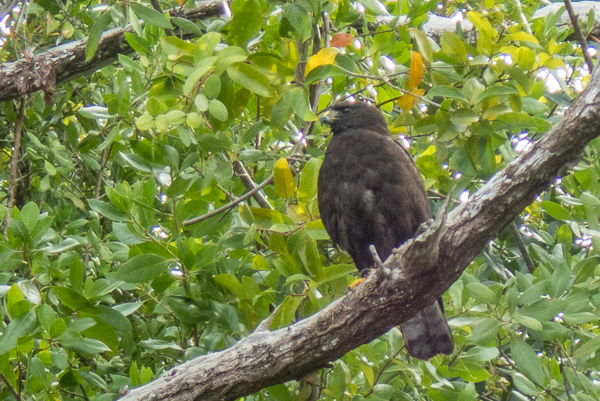
I observed this pair of Bald Eagles at dawn while kayaking. Apparently they followed me home because about an hour later I heard them calling close by. Check out the talons in the second picture below—top predator this!

Kayak Sailing on Little Lake Santa Fe

Nice day for sailing! Wind was about 12 mph with some gusts, warm but not hot. I recently bought a 2010 used Hobie Adventure with the optional sail. It works amazingly well, especially considering how narrow the hull is! (The first day I took it out in heavier winds I turtled it. It was very easy to right and self-rescue!) To be very specific, the rig pictured here does not depend on the pedal drive (an amazing bit of engineering that!). It uses a two foot dagger board that inserts through a special slot in the hull. I also have the larger rudder installed. Below is my informal review…

dagger-board

The asymmetrical controls take some getting used to. The “tiller” is a small lever near my left hand. It works in reverse, you turn it the direction you want to go rather than away as in a traditional sailboat. The dealer had added a small pulley to the aft lift point for the sheet. I discovered that there was a small eye fitting near the dagger board that served well as an informal block. This allowed me to pull the sheet upward and sort of lock it over my leg. This position was comfortable, easy to maintain for an entire tack and could be quickly released if there was a gust. I found it more natural to sail on a port tack because of the controls. With the boat heeling to the right I could lean to the left and still have full control of both the tiller and the sheet. (I can actually reach my left arm out and around the hull to hold on!) On a starboard tack I was leaning away from the tiller and into the sheet. This was a bit awkward and limited my ability to hike out. Not a big deal, just a factor you don’t have in a standard sailboat.

This is serious sailing craft in winds from about 8 to 16 mph. In light air you’re better off paddling or pedaling. When the wind is gusty above 20 mph it becomes difficult to keep the sail trim for more than a few seconds. You’re forced to let the sail luff to avoid capsizing. On the other hand, the challenge can be part of the appeal! <smile> On a warm day with warm water this is a very safe boat to tip over. (There is also an option to partially reef the sail by rolling it on the mast. I have since tried this and it works well!)

reefed-sail

The boat turned well both coming about and jibing. I was never “in irons” and since there is no boom there is nothing to swing across and hit you in the head. I used the paddle only to get off the shore. It points well and tacks upwind effectively. It seems to go fastest at a beam reach. When going downwind I discovered I could improve performance by holding the sheet out to the side with a free arm. The telltales are very useful, which surprised me for such as small sail. [The photos below were taken by Cathy Schell.]

Kayak Trip to Cedar Keys and Hall Creek

My colleague Carlos and I took a quick overnight trip to The Cedar Keys and the primitive campsite at Hall Creek. We put in at “Bridge #4″ at low tide and paddled through some very shallow water for the first hour or so. Once out in the Gulf I had a chance to try out my new sail.


Carlos is an experienced fisherman and he did catch fish… At one little eddy pool (which we named “Trout City”) he reeled in seven or eight Sea Trout in less than thirty minutes! Four of these were keepers and we dined well when we got back.


The Hall Creek Campsite is an isolated group of trees on slightly higher ground next to a very narrow branch of the creek. It was overgrown by prickly pear cactus and appears to be seldom used. There are what I think are limestone outcroppings in the creek (watch out!) and this may in part explain why there is higher ground at this location. Carlos took two amazing panoramas with is phone camera (iPhone 5) and I took a few HDR sets of the setting sun.

As we paddled we noticed many butterflies fighting the wind and heading out to sea. At the campsite we saw one of their refueling stations. Butterflies were everywhere in the warm afternoon sunlight. Monarch Butterflies make a four thousand mile journey to and from Mexico every year. Apparently those that make a left turn and wind up in Florida rather than Texas are doomed. But you can help admiring their perseverance! It is within the realm of possibility that some of them make the five hundred mile crossing. No one knows…


Finally there were the birds… lots of them. The second day started out foggy and remained mostly foggy for the rest of the day. At one point we could see what appeared to be a large white boat on the horizon, but this turned out to be a small flock of White Pelicans resting on a sand bar. They are magnificent birds! I drifted along in front of them and got a few good digital zoom photos before they took off. Most impressive were about a dozen American Avocet in winter plumage feeding in the flats. They never got close enough for a photo.


Link to Carlos’ Blog Entry for This Trip

Link to Carlos’ Blog Entry for 2009 Trip

Idiot America by Charles Pierce

Idiot America

How Stupidity Became a Virtue in the Land of the Free

Charles Pierce (2009)

This short confection of a book has a serious message… When “cranks” become mainstream and large segments of the population take them seriously, our entire society is at risk! He’s not against people with unconventional ideas, in fact he considers them to be an asset… a sort of check on the status quo. But an increasing number of cranks have won mainstream acceptance, and this is very alarming! Politics and religion are particularly vulnerable to exploitation.

The narrative begins at a “young earth” theme park depicting a time when dinosaurs and humans lived side by side. Silly on the face of it, but considered a real possibility by many in the US. He then proceeds to tell the story of Ignatius Donnelly (1831 – 1901), the man responsible for several persistent modern myths including Atlantis. Fascinating!

Pierce returns time and again to the Three Great Premises:

  1. Any theory is valid if it sells books, soaks up ratings, or otherwise moves units.
  2. Anything can be true if someone says it loudly enough. Fact is that which enough people believe.
  3. Truth is determined by how fervently they believe it.

To premise #2 I would add the old standby: “Tell any lie often enough and it will be accepted as truth.” The “birther” and anti-vaccine movements come to mind, as does the statement made by John Kyl on the floor of the Senate that was “not intended to be a factual.” Too bad senators can’t be impeached for lying!

Number 3 is particularly disturbing because of what it implies for intellectual discourse. Individuals have no obligation to be skeptical or make reasoned arguments, they only need to believe something strongly enough until it “must be true.” Not a very good basis for informed discussion! No wonder we live in a world of information free voters.

And then there’s Bullshit, a topic laid bare in a delightful little book by Harry G. Frankfurt—On Bullshit (2005). He deftly explains the difference between BS and lying. When someone lies, they are making a conscious choice to deceive. They know the truth but wish to conceal it. The bullshitter on the other hand doesn’t know the truth and more importantly doesn’t care!

Open a Window on Mars – You Must Try This!

The hyperbole is deserved!

If you open this link on a phone or tablet with “position sense” you will open a 360 panoramic view from the Curiosity Rover. High res, completely in sync with how you move the device. iPad at arms length is almost like being there! This is brilliant!!


Curiosity rover: Martian solar day 2 in New Mexico